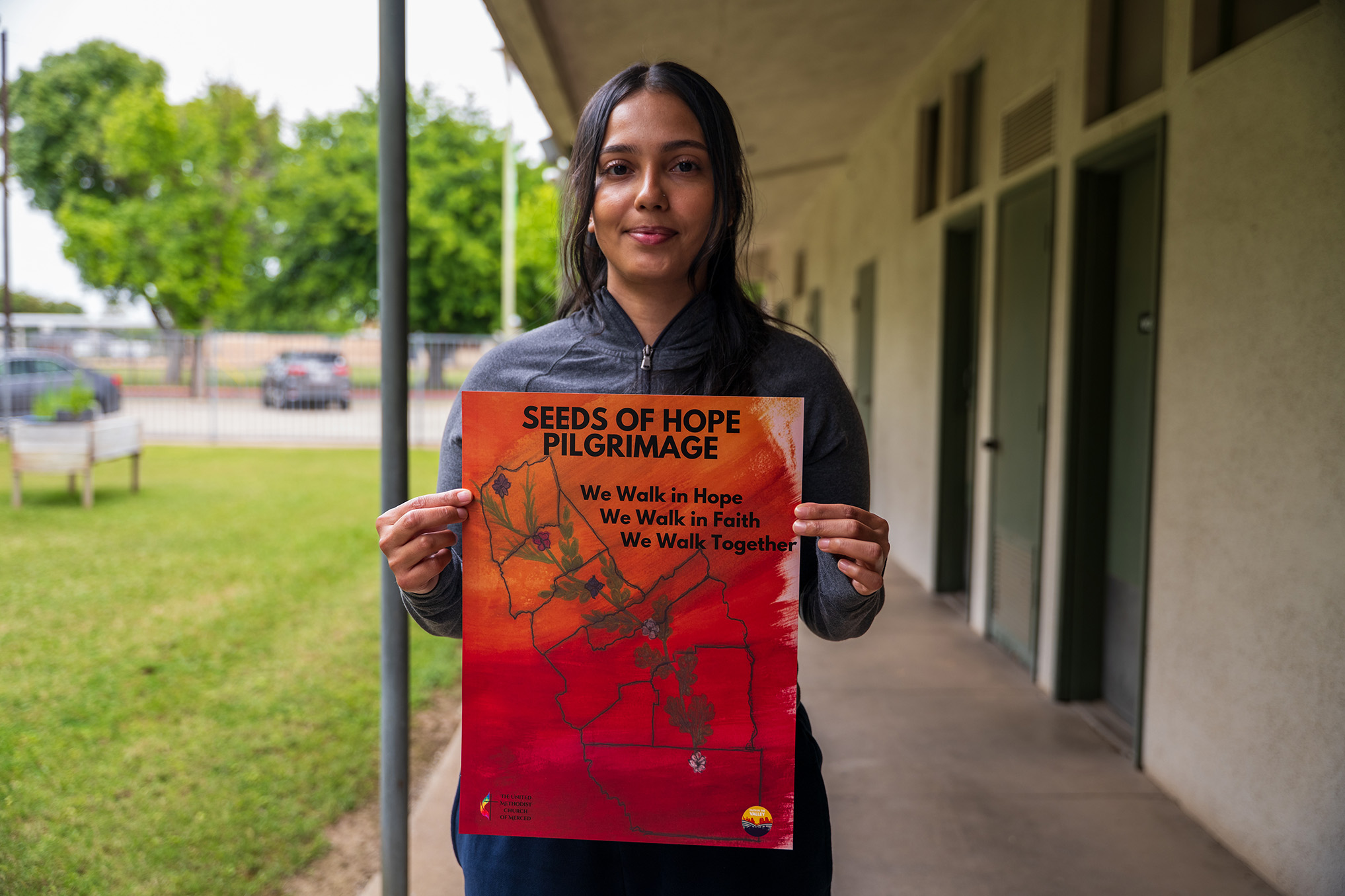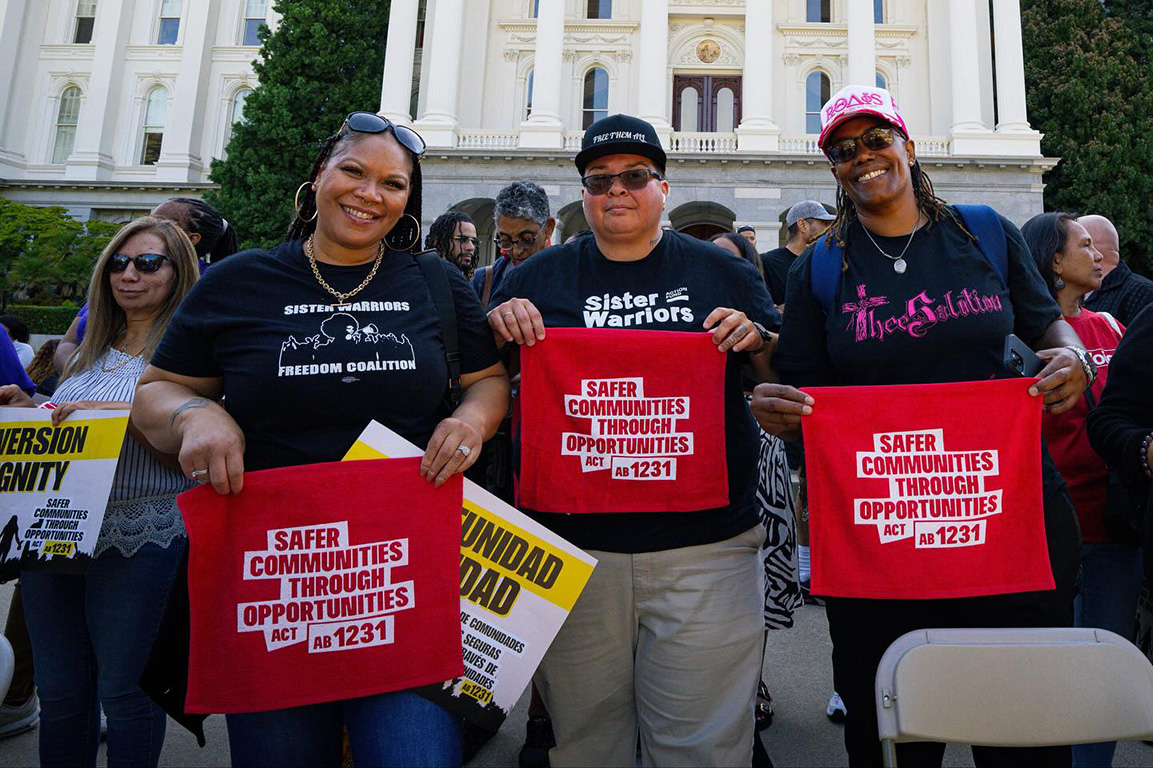
Our Seeds of Hope pilgrimage reminded us why faith-based organizing isn't just something we do — it's who we are.
A Vatican Priest Came to Listen—And What He Heard Might Reach the Pope
Pastor Trena Turner, one of our clergy leaders and board members, recently said something in Stockton that has stuck with us: “An encounter is where we’re willing to be changed by truly seeing and hearing one another.”
That’s a bold claim.
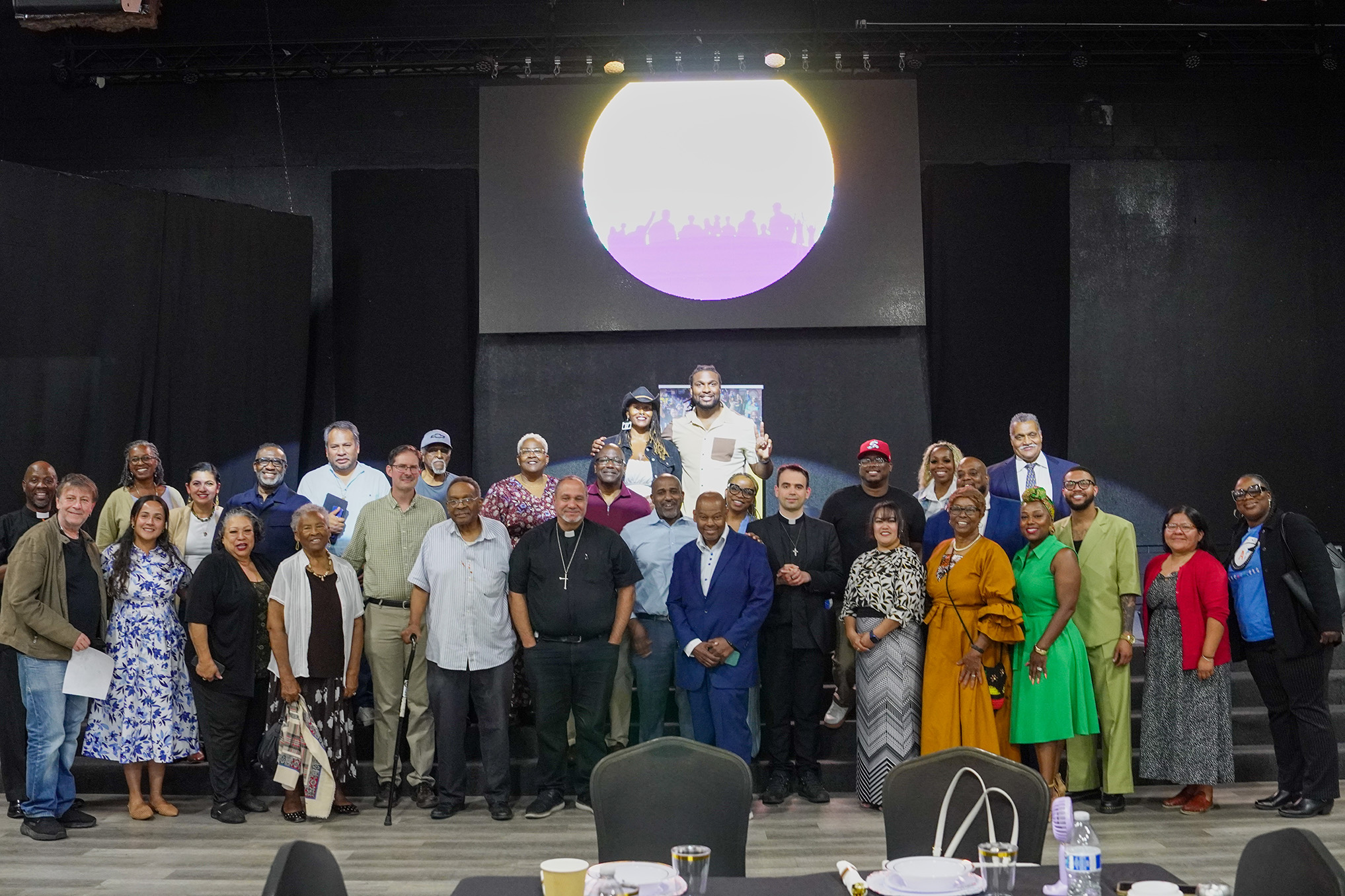
But picture the room where she said it. More than 25 Black clergy leaders from across Stockton and Sacramento packed in for the morning at a church gathering where people usually do the talking at someone—not with them. Except this time, the person on the other side of the table had traveled from the Vatican, and he wasn’t there to explain anything. He was there to listen.
His name is Fr. Mattia Ferrari. He’s the coordinator of the World Meeting of Popular Movements and chaplain of Mediterranea Saving Humans, which means his day job is showing up on one of the hardest borders on Earth—the Mediterranean Sea—to help pull people out of the water.
He’s seen what it looks like when a government system decides some lives count less than others.
So when he sat down in Stockton this month with community members carrying the weight of generations of over-incarceration, racial injustice, a lack of investment in young people, the ongoing struggle for real public safety, and increased ICE raids—and with the clergy who’ve walked beside them through all of it—he wasn’t there just to give a sermon. He knew the people most affected by these realities were the ones best positioned to name both the challenges and the path forward.
Here’s the thing worth sitting with: This wasn’t a one-off visit.
Fr. Mattia’s trip through the Central Valley—Stockton, Fresno, Lodi and beyond—wasn’t built around a single community’s story. It was built to hold several at once. Immigrant families staring down detention and deportation. Black neighbors still living with the trauma of mass incarceration. Native American neighbors carrying the unfinished business of displacement and broken promises. Families of color just trying to outrun the cost of living.
Different wounds, different histories, same underlying question that Pastor Trena named out loud: How does the Church faithfully accompany people whose dignity has been diminished by systems bigger than any one of them?
That question doesn’t stay in the Central Valley. It’s the same question the Catholic Church specifically is wrestling with right now.
Pope Leo XIV’s first encyclical, Magnifica Humanitas, calls slavery “a wound in Christian memory.” He asks for pardon on behalf of the Church—not as a footnote, but as a starting point—and pushes for restorative justice: repairing relationships, confronting the ongoing effects of racism and exploitation, not just naming them from a distance.
A pope who’s willing to say the Church owes something doesn’t just need a well-written document to back that up. He needs to know what repair actually looks like on the ground, in a place like Stockton or Fresno or Bakersfield, from the people who’ve been waiting on it the longest.
So here’s what happened next. At the close of the gathering, our executive director, Pastor Curtis Smith, didn’t let the moment end on warm and fuzzy feelings. He called on all clergy leaders to keep going—to commit to truth-telling, to actually examine the Church’s history, to build real relationships, and to pursue concrete acts of repair.
Pastor Trena named the stakes plainly.
“Black communities continue to experience disproportionate incarceration at every stage of the criminal legal system. Black immigrants likewise face detention and deportation at rates that exceed their representation among the immigrant population. Latino families continue to bear the weight of detention, deportation, and family separation throughout our Valley,” she said. “Different histories, different wounds. But they call for the same moral response.”
Fr. Mattia is carrying that charge back with him.
Literally, he’ll report directly to Pope Leo XIV on what he heard here, feeding it into a global movement that runs from the Central Valley to the Mediterranean and everywhere in between.
In Fr. Mattia’s own words: “In the Valley, we saw the dignity of people who are in some way marginalized…people who organize themselves, come together, build solidarity and struggle together. In different contexts, we see the same solidarity and the same fraternity. This is the Gospel.”
That’s the part we keep coming back to.
Not that a priest from the Vatican showed up. It’s that he showed up to be changed by what he heard, and that what he heard in a room in Stockton might now shape a conversation happening in Rome.
This is what’s possible when the direction of listening actually reverses. When the people closest to the pain get to be the ones setting the terms, and the institution with the most power in the room is the one taking notes. Faith in the Valley has spent years building the kind of trust that makes a moment like this possible—the relationships, the organizing, the belief that a better future has to be built together or it doesn’t get built at all.
Fr. Mattia hasn’t headed back across the ocean yet. He’s still on the road, still listening and carrying these stories with him to whatever community comes next.
But when he finally does sit down with the Pope, the Central Valley will be part of that conversation. That’s the future we’re building—one encounter at a time.

Related Posts