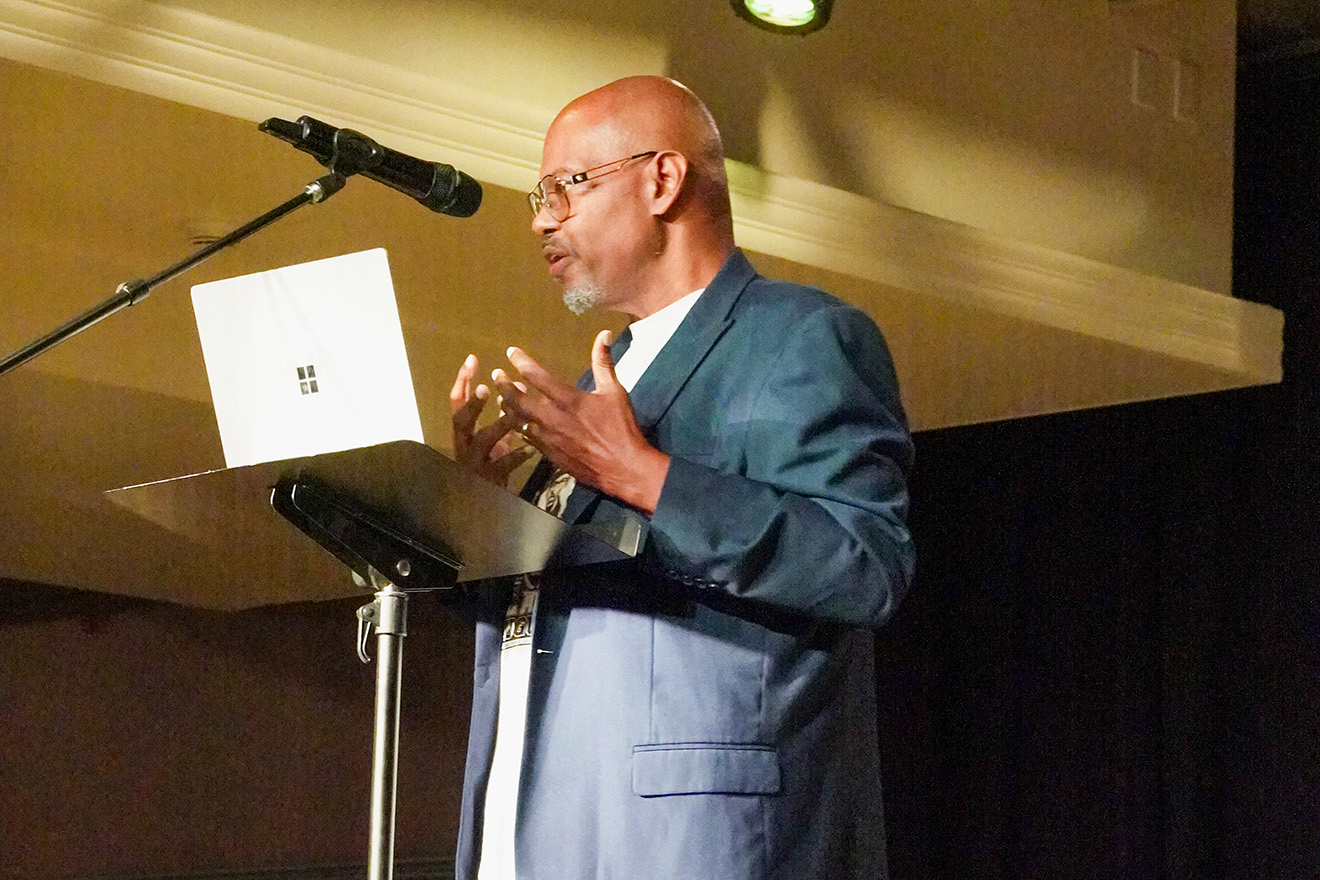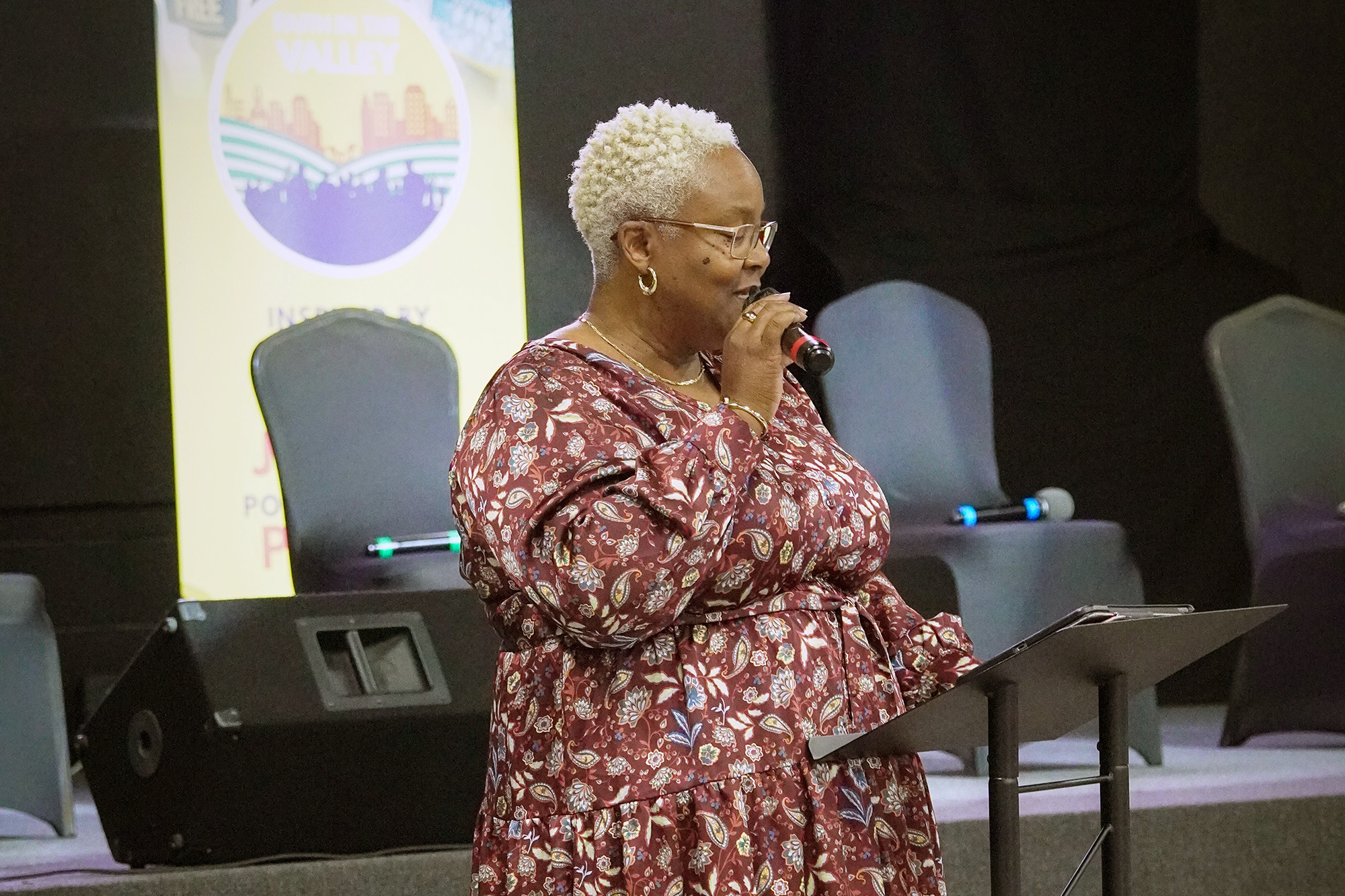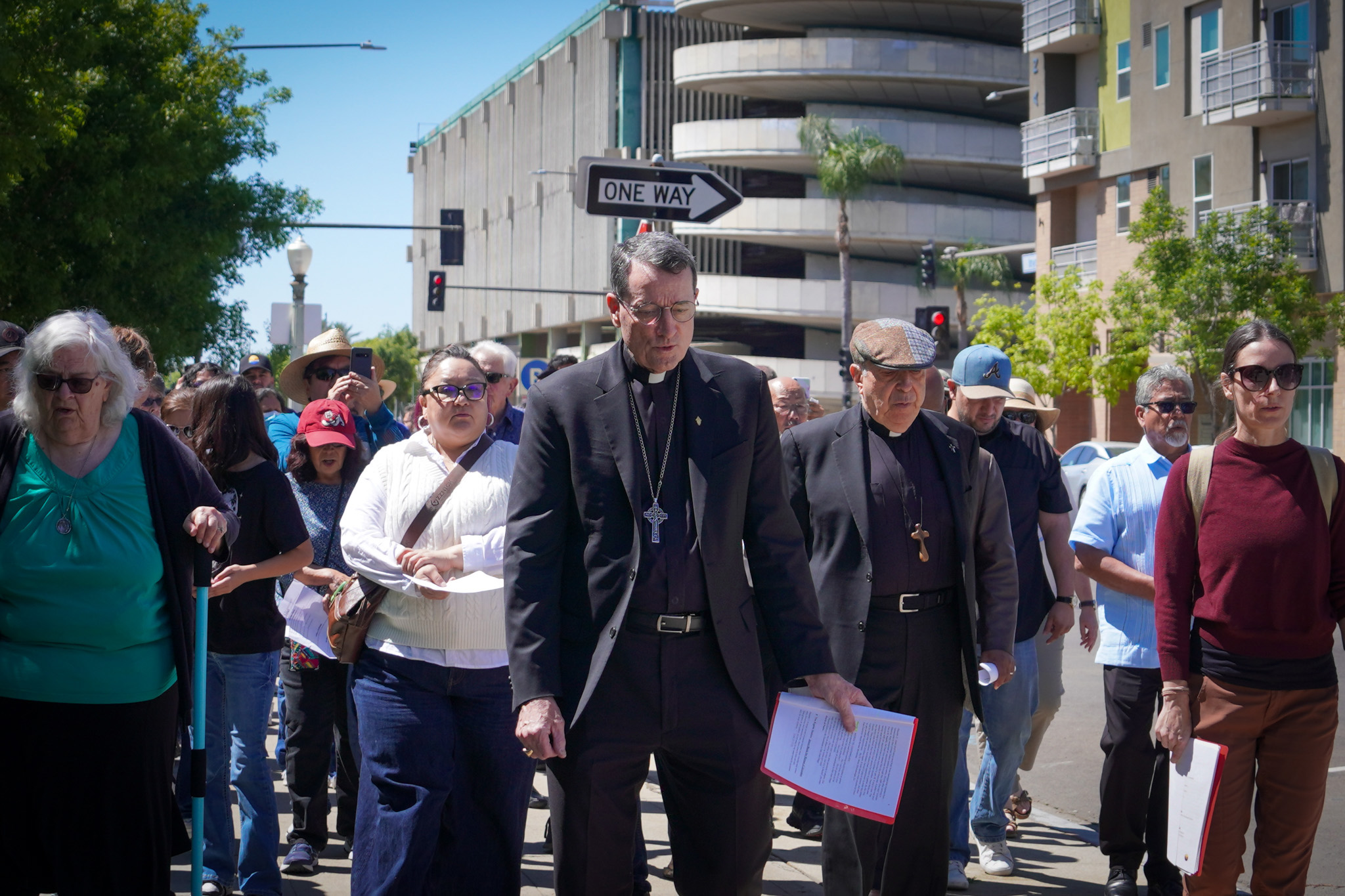
It's August 13, and the basement of Woolworth’s in Bakersfield is packed. Pastor Curtis Smith,…
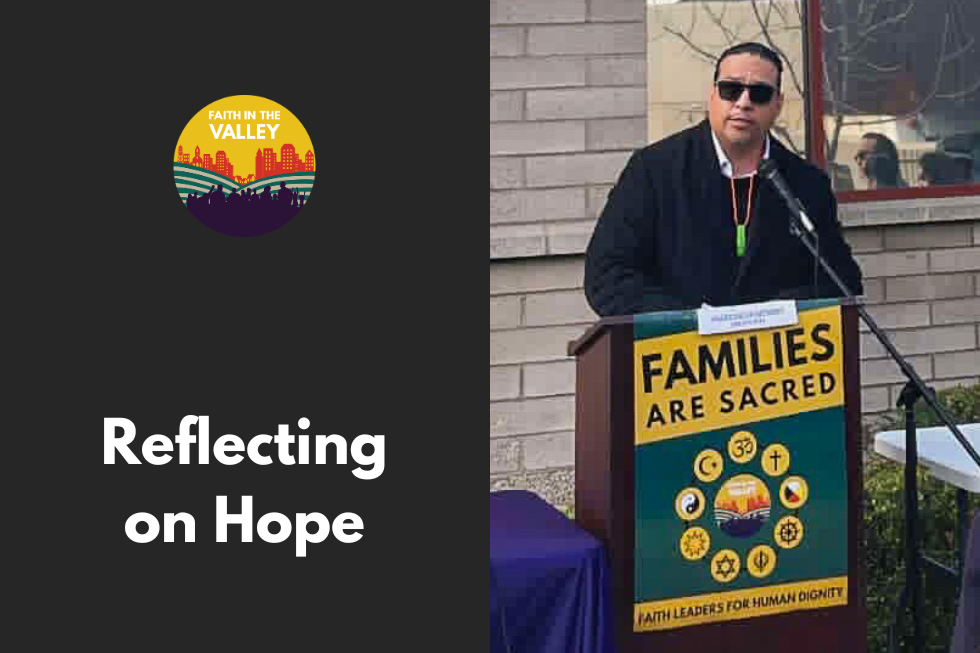
Reflection: Hope Wears Work Clothes
Last month, Faith in the Valley organizer Roman Rain Tree stood in front of a Mennonite congregation and preached a sermon that’s been following him around ever since—the same way it follows him to vigils, to doorsteps, and into the conversations he has with families across Fresno County every week. We’re sharing it here almost exactly as he gave it because some things are better heard in the words they were first spoken in.
Grace and peace to you in the name of our Lord Jesus Christ.
It is an honor to worship with you today. Thank you for welcoming me into your congregation and into your community. I am especially grateful because I know the Mennonite church has been prayerfully discerning what it means to confront the legacy of the Doctrine of Discovery and to walk toward a healthy relationship with Indigenous peoples.
That work is not about carrying guilt for the past. It is about becoming more faithful disciples of Jesus today.
The Doctrine of Discovery taught that land could be claimed, cultures erased, and Indigenous peoples treated as obstacles rather than neighbors. It elevated domination over discipleship and possession over relationships.
Jesus taught something entirely different. He crossed boundaries to meet people where they were. He welcomed the stranger. He touched those others refused to touch. He washed His disciples’ feet. He showed us that true power is revealed through humility, service, and love.
As a Yokuts and Nuum man—both words mean “a human being or people”—I come before you not with condemnation, but with gratitude. Thank you for being willing to listen, to learn, and to walk alongside Indigenous communities. Reconciliation is not something one person does for another. It is something we build together, one relationship at a time.
Earlier this week, I read what someone called a modern parable. Someone imagined asking artificial intelligence, “If you were evil, what would you do to humanity?” The imagined response wasn’t, “I would make everyone worship me.” Instead, it said: “I wouldn’t waste my time trying to get you to worship me. No, I would just convince you not to worship God at all. I would tell you the truth is relative—your truth, my truth—until nobody knows which way is up and truth is irrelevant. I’d whisper, as long as you’re happy, it’s right. I would keep you busy, too busy for prayer, too busy for church, too busy to ask eternal questions. I’d fill your hands with a phone so you would never have time to fold them in prayer. I would break families apart—get fathers absent, marriages bitter, kids confused. If I can fracture the home, I can fracture the future. I’d divide the church. Petty arguments, comparison, offense, celebrity culture. If I can get Christians fighting each other, they’ll never fight me. I’d desensitize you—glamorize sin in movies, normalize it in music, laugh at it in comedy, celebrate it in culture—until what once shocked you now entertains you. I would attack your identity and make you question who you are, where you belong, and whether you matter. I’d whisper shame so loud you can’t hear God’s voice of love. And through it all, I wouldn’t even try to prove my existence. My greatest trick is to convince you I’m not real. Because if you don’t believe I’m real, you’ll never resist.”
Whether or not every line speaks to you, the story reminds us of something Scripture has always taught. Evil does not only appear through dramatic moments. Sometimes it whispers. It distracts. It isolates. It convinces us we are too busy to pray, too busy to listen, too busy to love our neighbors.
Christ does the opposite. Jesus gathers what has been scattered. He restores what has been broken. He reminds us who we are.
In my culture, people often misunderstand what it means to be a warrior. Many imagine someone who wins battles. But our Elders taught us that the greatest warriors were those who carried the greatest responsibility. A warrior protected children. A warrior cared for Elders. A warrior defended the land and water because they understood those gifts belonged not only to them, but also to future generations—those yet to be born. A warrior’s strength was measured by how much responsibility they were willing to carry, not by how much power they possessed.
One Elder once shared a teaching that has stayed with me. Imagine walking through the mountains with your family. The trail is steep, and an Elder begins to struggle. No one argues about whose responsibility it is. One person quietly carries another bundle. Someone offers an arm. Others slow their pace so no one is left behind. No one expects recognition. They simply understand that the people move together, or they do not move at all.
Every time I remember that story, I hear Paul’s words: “Bear one another’s burdens.” I hear Jesus saying, “Love your neighbor as yourself.” I see the early Church sharing what they had so that no one among them would be in need. These teachings are not strangers to one another. They remind us that God created us for relationship—with Him, with one another, and with creation.
Roman C. Rain Tree is a community organizer with Faith in the Valley and a member of the Yokuts and Nuum peoples, serving congregations and communities across Fresno County. He carries relationships across faith traditions and denominations—from vigils outside the Fresno ICE processing center to community platforms across the Central Valley—grounded in the belief that organizing is what discipleship looks like with its sleeves rolled up. Roman preaches and organizes the same way his elders taught him to walk a mountain trail: nobody moves ahead until everyone can move together.

Related Posts