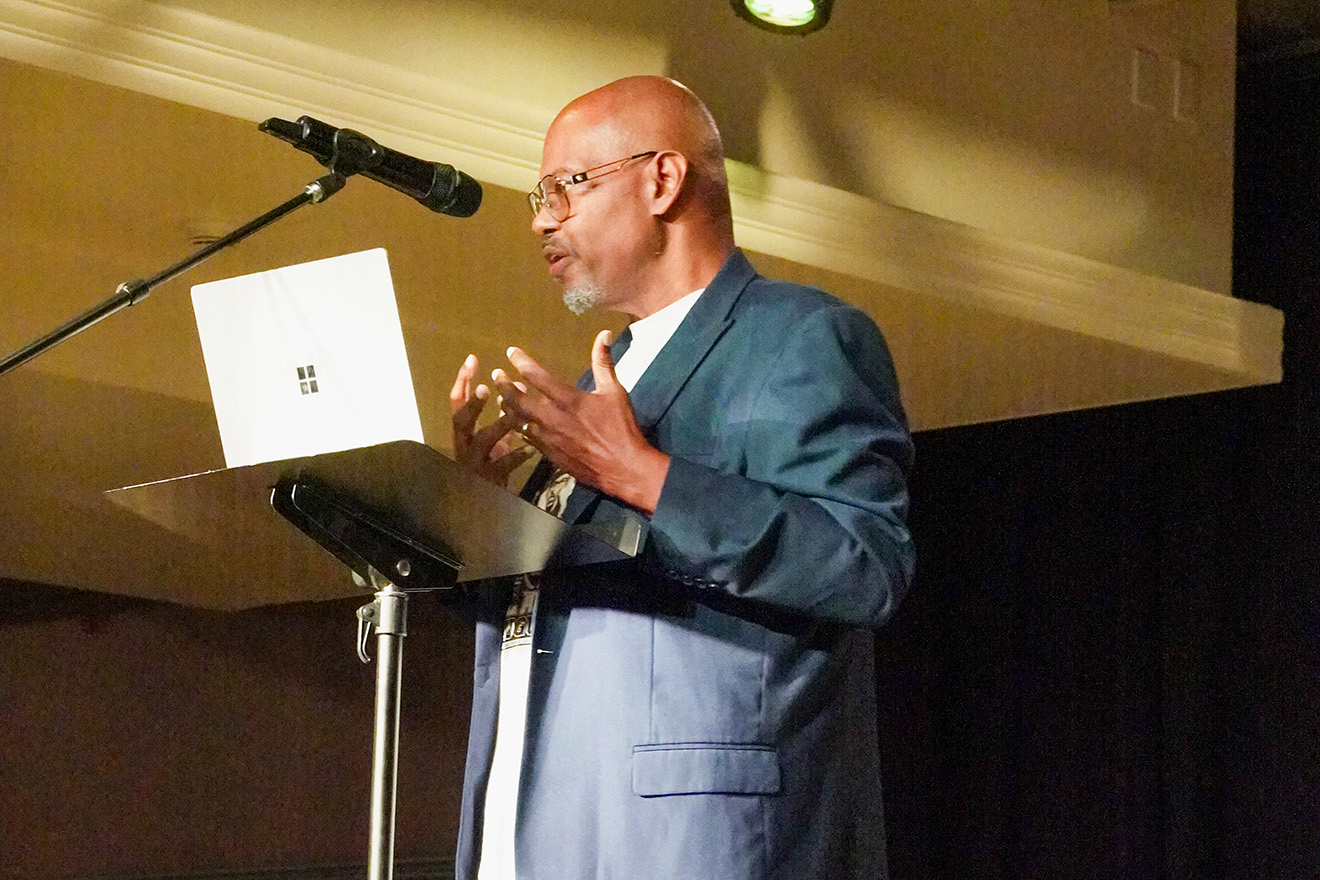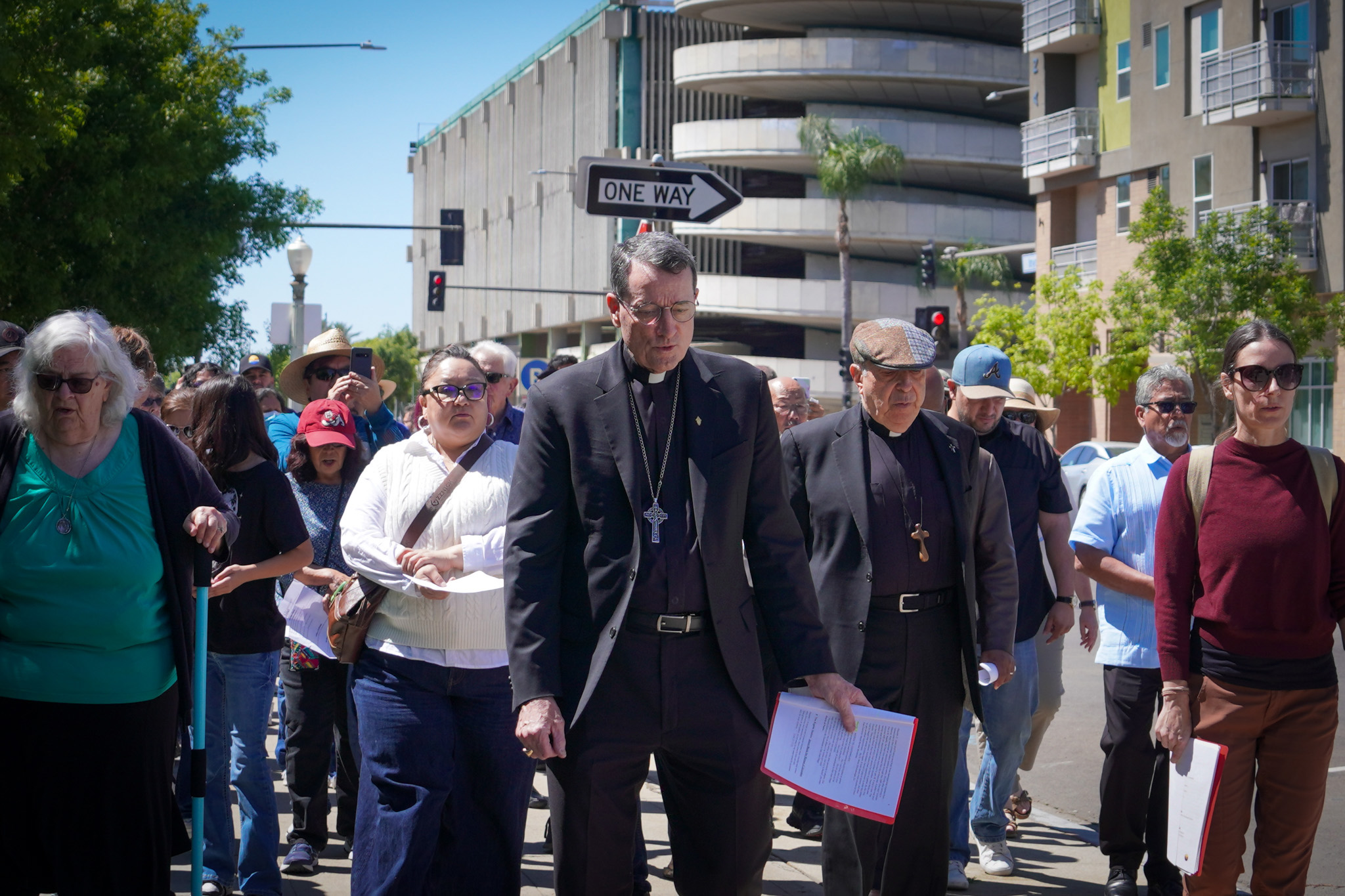
It's August 13, and the basement of Woolworth’s in Bakersfield is packed. Pastor Curtis Smith,…
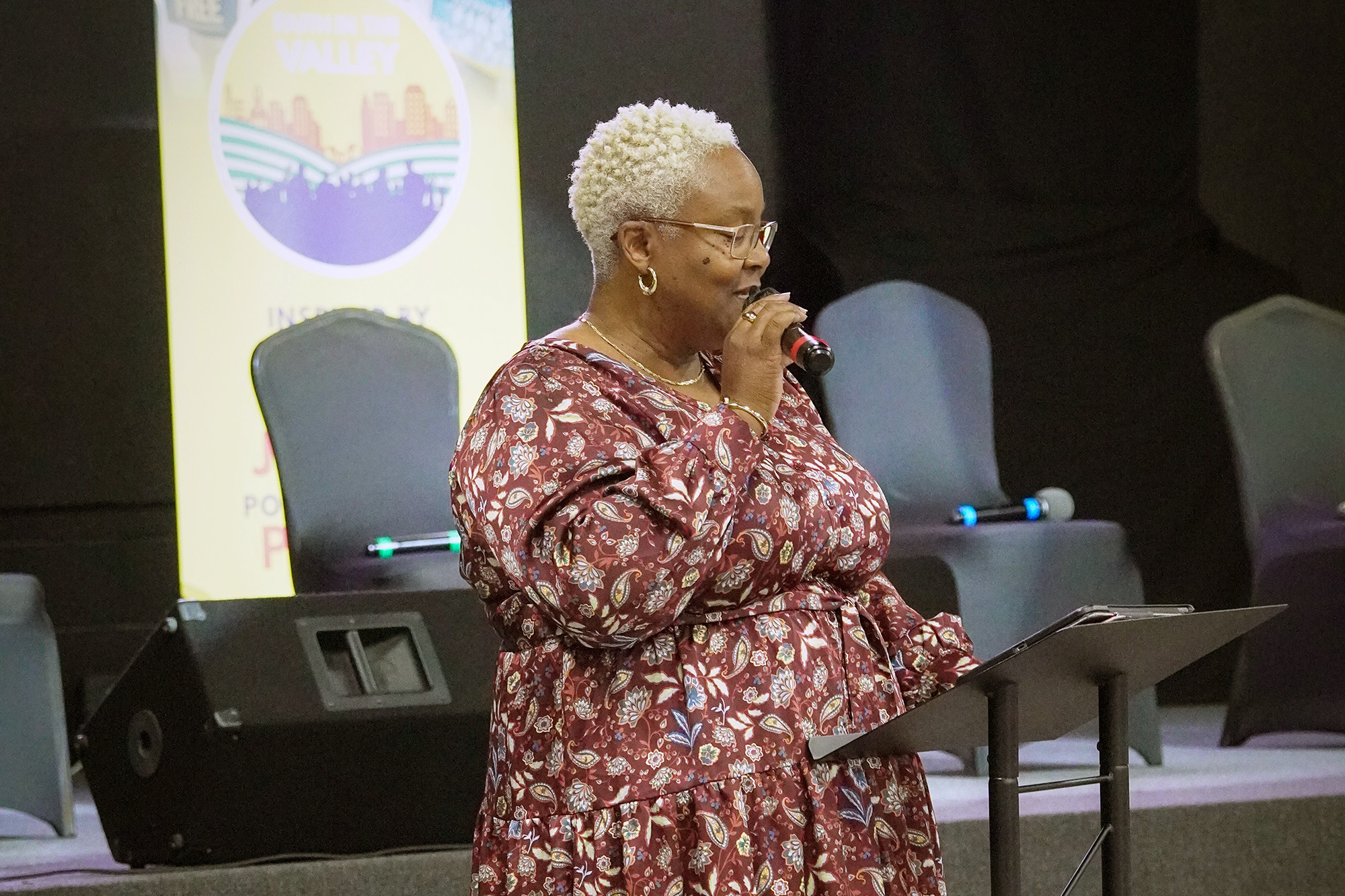
Reflection: Pastor Trena Turner Welcomes Fr. Mattia to the Central Valley
Before the dialogue and encounter began, Pastor Trena Turner took the mic to welcome Fr. Mattia Ferrari, and what she said set the tone for everything that followed.
Here are her remarks in full:
“Father Mattia, thank you for making the journey to California’s Central Valley. Your presence reminds us that while our communities may be separated by oceans, the work of justice, mercy, and human dignity belongs to one global family of faith.
Several years ago, I had the privilege of participating in the World Meeting of Popular Movements in Rome with Pope Francis. I also had the privilege of helping organize one of its gatherings here in the Central Valley. What I witnessed then—and what continues today—is the Church calling us not simply to care for people on the margins, but to walk with them.
That invitation brings us together today.
Here in the Central Valley, we live in a region that feeds much of the nation. Yet it has also become one of the nation’s largest corridors of incarceration and immigration detention.
For decades, prisons have shaped our landscape. More recently, detention centers have become part of that same landscape. The result is that many of our neighbors experience separation from their families—not because they have lost their humanity, but because systems have determined where they belong.
And while these realities affect many communities, they do not affect all communities equally.
Black communities continue to experience disproportionate incarceration at every stage of the criminal legal system. Black immigrants likewise face detention and deportation at rates that exceed their representation among the immigrant population. Latino families continue to bear the weight of detention, deportation, and family separation throughout our Valley.
These are different histories.
They are different wounds.
But they invite the same moral response.
The conversation around reparations asks how we repair the enduring harm left by slavery, segregation, discrimination, and generations of unequal opportunity.
The conversation around immigration asks how we honor the dignity of those seeking safety, opportunity, and belonging.
Neither conversation diminishes the other.
Neither competes with the other.
Both ask a common question:
What does love of neighbor require of us when people have been harmed by systems larger than themselves?
As faith leaders, we are not called to rank suffering. We are called to recognize it. We are not called to divide compassion into categories. We are called to enlarge it.
Scripture reminds us that “if one member suffers, all suffer together.” Our calling is not simply to comfort those who suffer, but to participate in God’s work of restoration wherever dignity has been diminished.
When I was in Rome, I came away convinced that the Church is at its best when it refuses to choose between proclaiming the Gospel and protecting human dignity. We can and should do both. The two have always belonged together.
My prayer is that today’s conversation helps us listen more deeply than we speak…to learn from one another…and to leave with renewed commitment to build communities where every person is seen, valued, and welcomed as a child of God.”

Related Posts