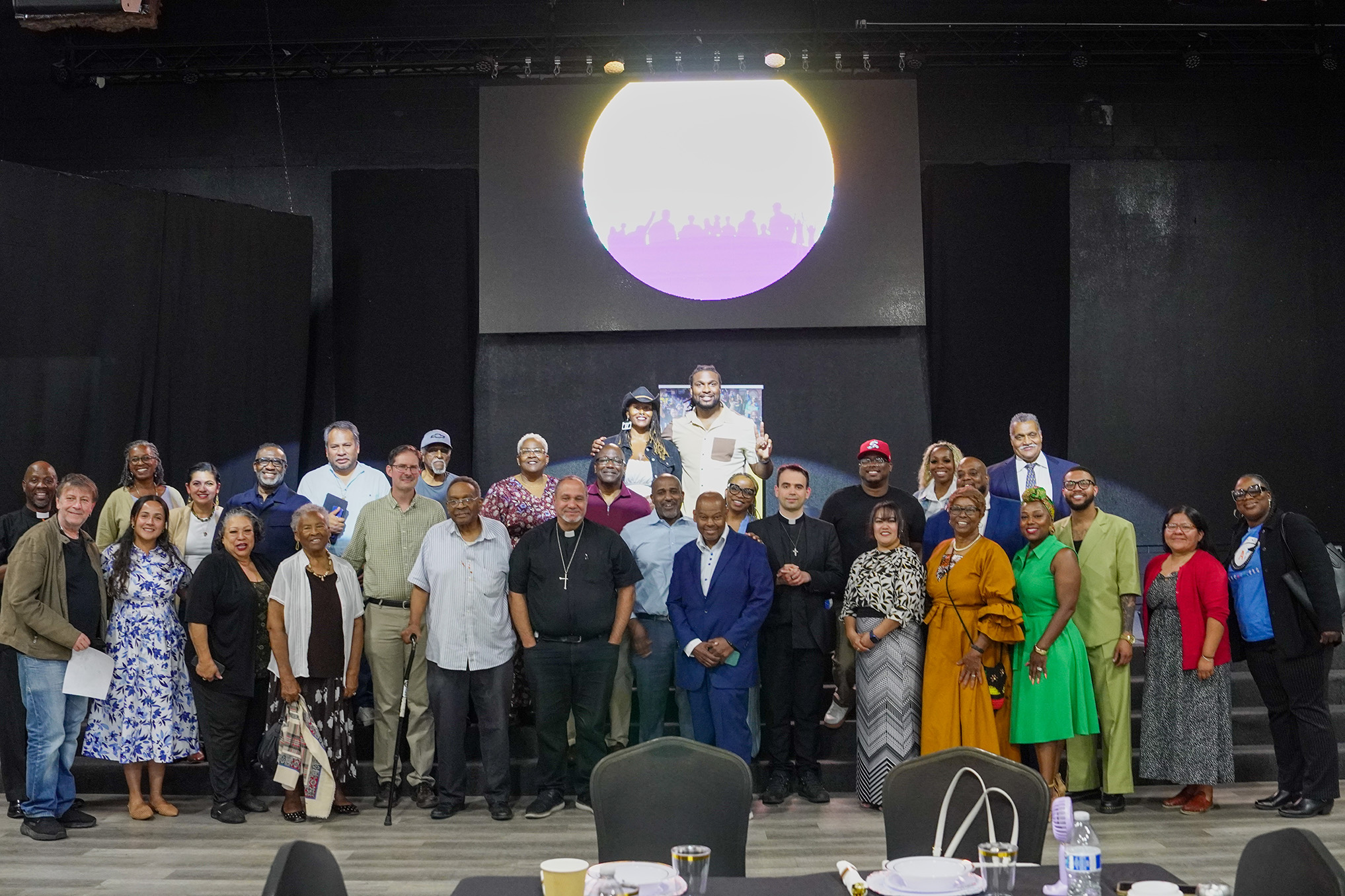
Pastor Trena Turner, one of our clergy leaders and board members, recently said something in…
We Traveled 200 Miles Across the Central Valley. Here’s What We Saw.
Frances Alaniz was on her way to the hospital when her phone rang.
She was driving from Wasco to her long-awaited cancer surgery—the one her doctor had assured her would be fully covered by her insurance.
She had waited. She had planned. She had braced herself for what came next in her treatment. And then, without warning, without explanation, the call came: her surgery had been canceled.
Standing in the rain in Bakersfield in April, Frances told that story to a crowd of community members, faith leaders, and advocates who had traveled over 200 miles to hear it. Her voice cracked. You could hear the weight of every word. And the crowd leaned in, listening carefully, taking it all in.
“I’m not an animal,” she said. “I was begging. A whole month went by.”
That moment—raw, human, and completely undeniable—is exactly why we organized the Seeds of Hope pilgrimage.
A Region in Crisis, City by City
The Central Valley is often talked about in statistics.
Poverty rates. Uninsured percentages. Overcrowded housing. Those numbers are real, and they matter.
But numbers don’t ride a bus. Numbers don’t cry in the rain. People do.
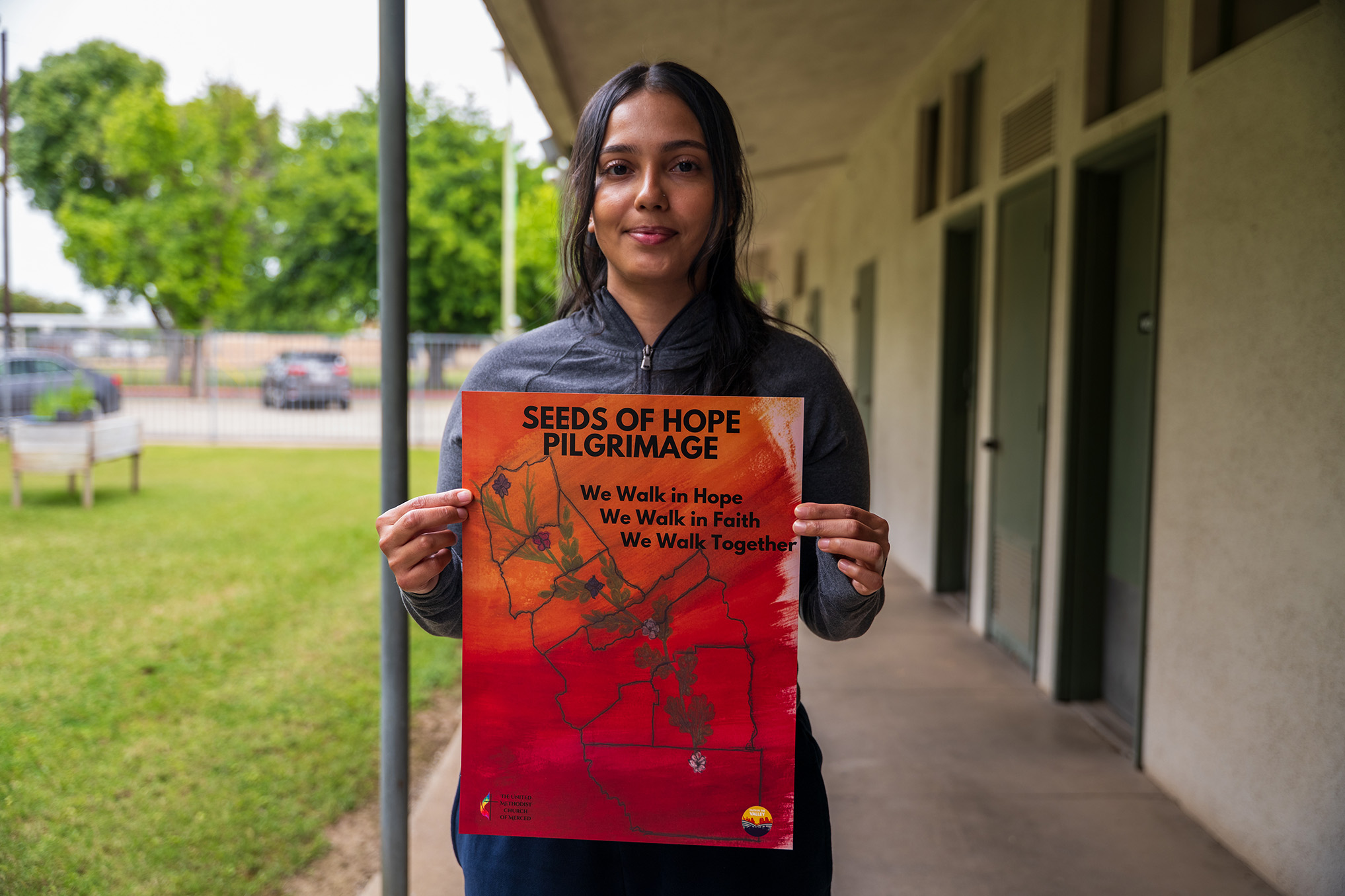
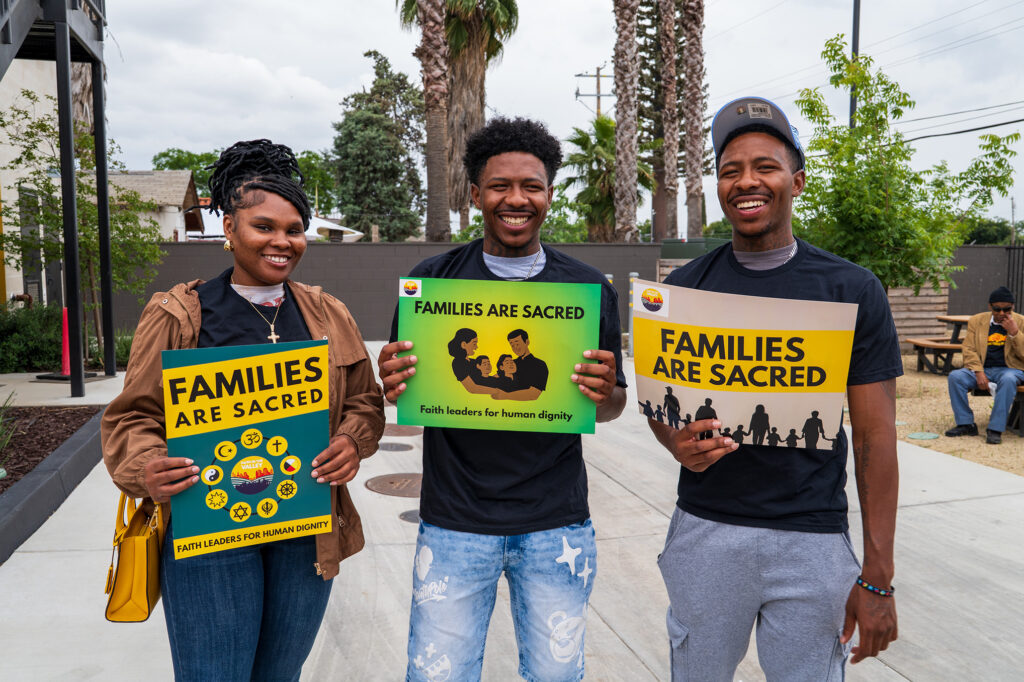
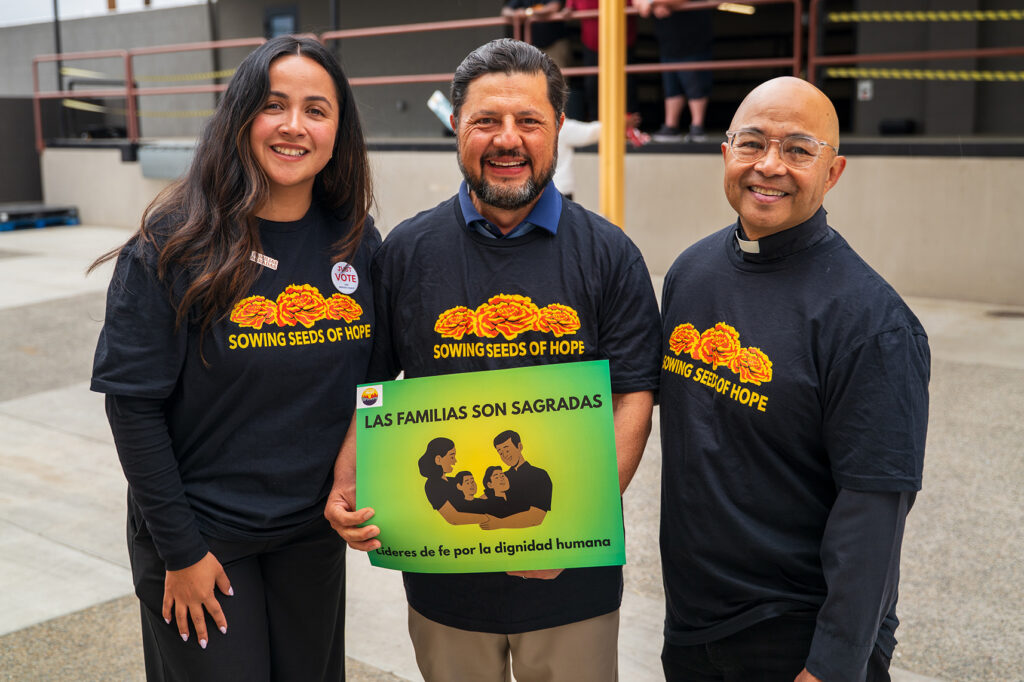
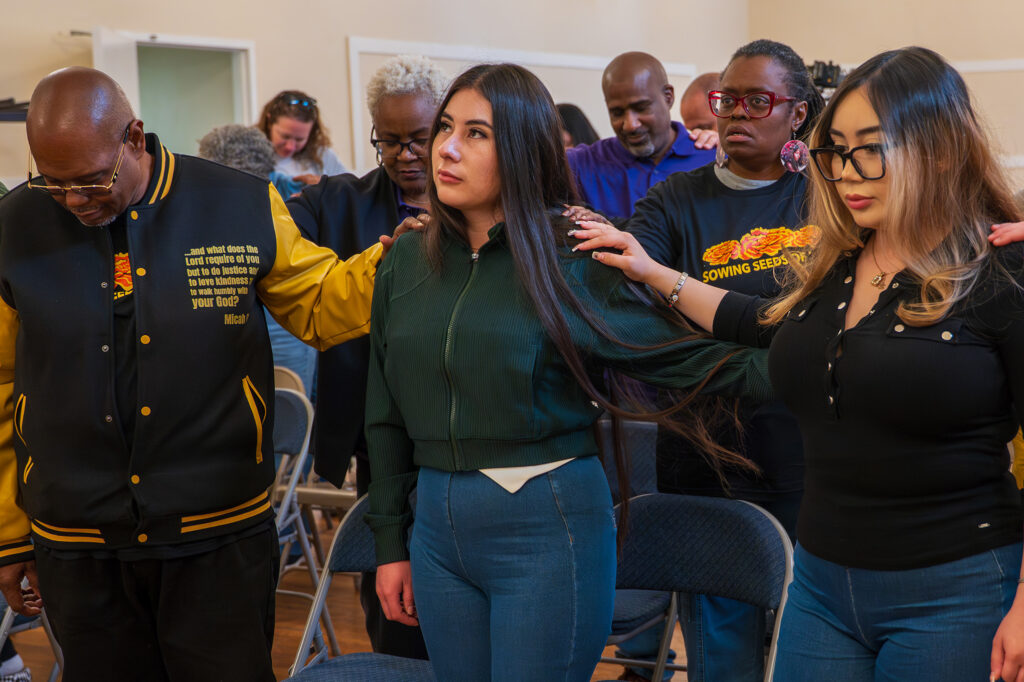
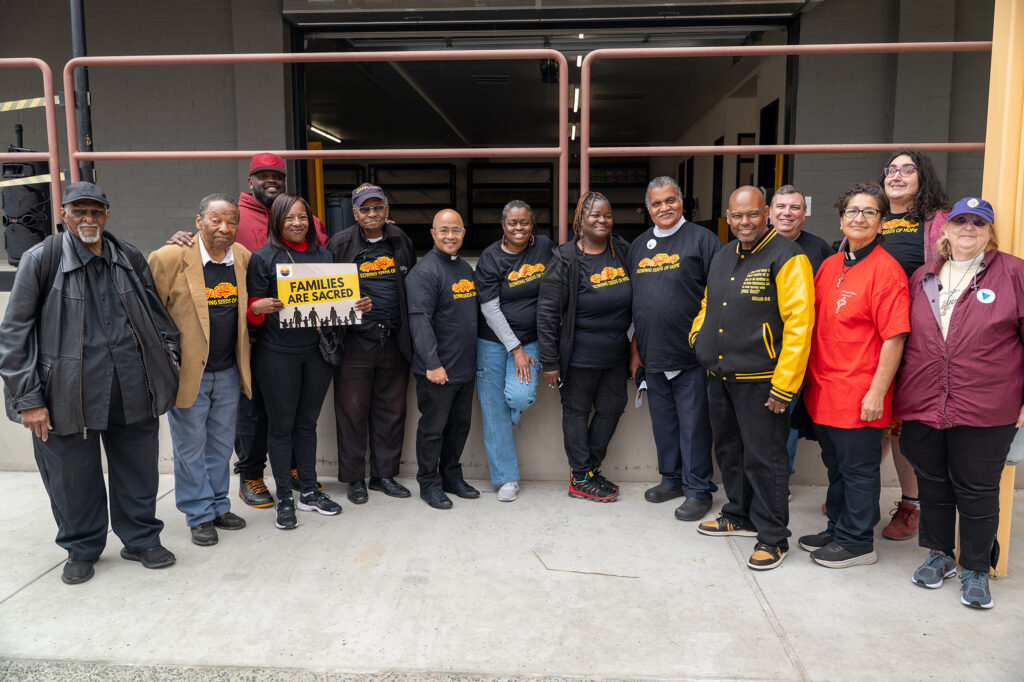
On April 25, our network brought people together across five counties—Stockton, Modesto, Merced, Fresno, and Bakersfield—for a public witness of faith, love and justice. Community members, clergy, and families traveled together, some joining for a single stop, others riding the full route from start to finish. Along the way, they carried a simple but urgent message: Housing justice, healthcare access, food security, public safety, and the protection of our immigrant neighbors are not separate issues. They are one crisis, shared across one Valley.
Each city grounded that truth in local reality.
In Stockton, we opened with a call for safety, healing, and real investment in communities too often written off.
In Modesto, neighbors gathered at Church of the Brethren to add their voices and, for many, to hop on the bus and keep going.
In Merced, we centered housing justice. Renters across the Valley are being squeezed by rising costs and unsafe conditions. We called for stronger protections and real healthcare access.
In Fresno, we said plainly: No neighbor should go hungry. We called for investment in community-based violence intervention—the kind that actually works.
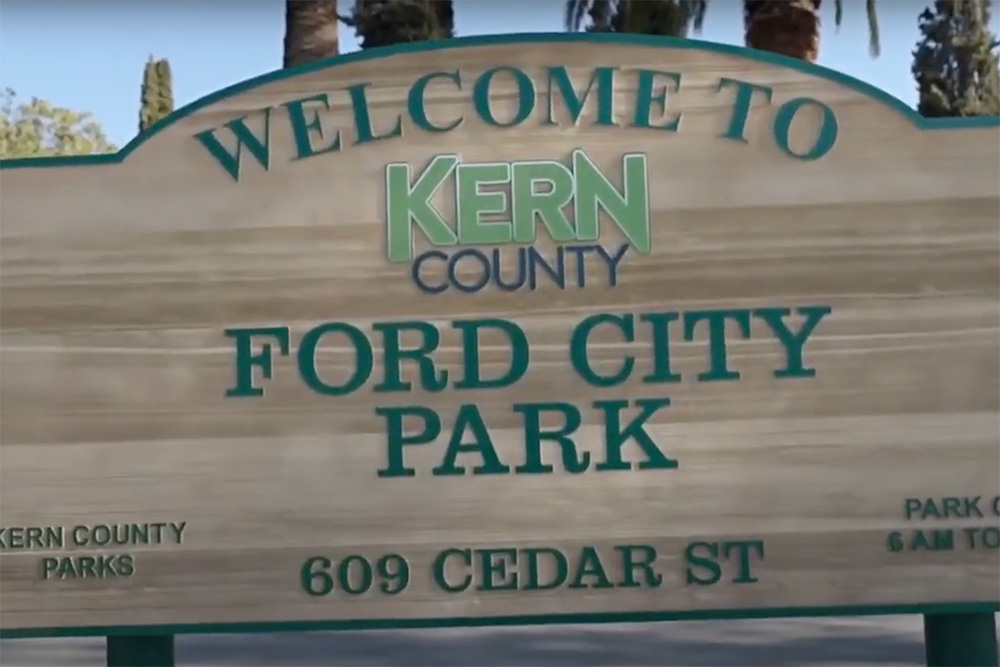
And in Bakersfield, standing together in the rain, we listened.
“We believe in human dignity. We believe that home is sacred. Healthcare for all. Safer communities. Food on every table. A solid social safety net. And the protection of our immigrant neighbors and loved ones—across all eight counties we call home.” —Daniel Rodela
‘Their Lives Matter’
Rafa is 36 years old. He is from Mexico. And he spent two years at Golden State Annex in McFarland, seven months at Mesa Verde in Bakersfield, and additional time at Core Civic in California City—three of Kern County’s immigration detention facilities.
His voice came through a speakerphone, calm and grateful, thanking everyone who had shown up that day.
And then he described mildew on the walls of Mesa Verde. Nurses who weren’t prepared. Medical care denied. A facility in California City that opened in August 2025 without proper permits, without passing health inspections where everything costs at least $5, where food portions are tiny, where detainees organized hunger strikes just to be heard.
“My family and for the most of it was God,” Rafa said. “The praying, the faith, and just staying positive kept me moving forward.”
He wasn’t asking for sympathy.
He was asking for inspections. Accountability. Basic human dignity inside facilities that are supposed to operate under public oversight, but often don’t.
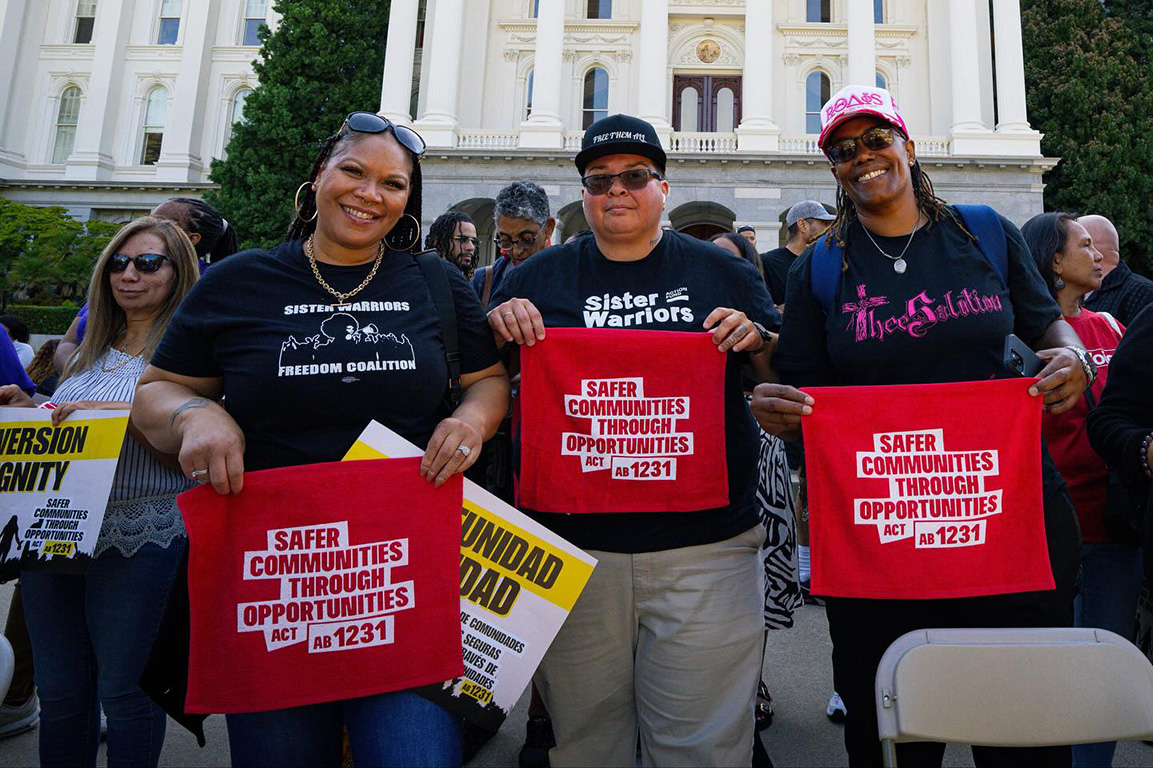
That ask has a policy answer: AB 2465 and SB 995, two bills moving through the California legislature, one that would end state funding that supports family separation and another that would begin real accountability and inspections inside detention centers.
Staff from State Sen. Melissa Hurtado’s office and Assemblymember Jasmeet Bains’ office joined us that day. They heard Rafa. They heard Frances. They committed to carrying these stories back to Sacramento.
That’s what a pilgrimage can do that a letter can’t.
Our Faith Is What Got Us on the Bus
Pastor Madeleine “Maggie” Guekguezian of the United Methodist Church of Merced was one of the people who planted this seed.
Last October, at a clergy gathering, she asked a simple question: What can we do that speaks to our faith—to love and dignity—in this moment?
The answer became Seeds of Hope.
“I’m here because I’m a disciple of Jesus Christ,” she said in Bakersfield. “I don’t think I could live with myself, knowing I had the ability to do or say something.”
That’s the heartbeat of faith-based organizing. It’s not a strategy. It’s a conviction.
Across traditions—Christian, Muslim, Jewish, and beyond—we are called not just to pray for justice, but to become instruments of it.
As lead organizer Daniel Rodela put it from the mic: “We believe in human dignity. We believe that home is sacred. Healthcare for all. Safer communities. Food on every table. A solid social safety net. And the protection of our immigrant neighbors and loved ones—across all eight counties we call home.”
On a bus filled with laughter, prayer and people who had every reason to be exhausted but refused to be, that belief carried us for 200 miles.
Every Step Was a Seed
The work doesn’t end in Bakersfield.
Francisca still faces uncertainty about her Medi-Cal coverage tomorrow. Rafael’s testimony still needs to reach lawmakers who have the power to act. Families across the Valley are still waiting on housing protections, food access, and a healthcare system that sees them as human beings, not liabilities.
But something shifted on April 25.
Communities that often feel isolated from one another recognized themselves in each other’s stories. A renter in Merced and a detainee in Kern County and a farmworker in Wasco—their struggles are different in their details and the same in their root cause.
Bottom line: We are one Valley. And when we organize together, across cities and counties and faith traditions, we build the power to care for one another and to demand something better.
Want to add your voice? Contact your state legislators about AB 2465 and SB 995. Show up to our next action. And if you’re a faith leader or community member who wants to get more involved with Faith in the Valley, contact us today. There are more seeds to plant. Some of the moments featured in this post were reported on by Kern Sol News. Head over to their website at southkernsol.org to read their full coverage.

Related Posts